Call Us Today!
(970) 247-2677
New Patients
(970) 233-7384


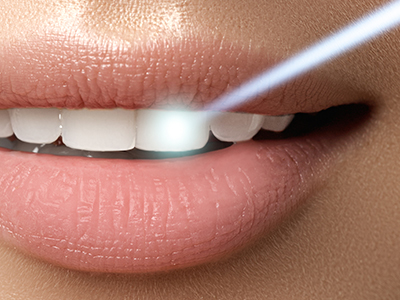
Laser dentistry uses focused light energy to interact with soft tissues and tooth structure in precise, controlled ways. Different types of dental lasers are calibrated to target either soft tissue (gums, mucosa) or hard tissue (enamel and dentin). When applied correctly, the laser’s energy can remove diseased tissue, prepare surfaces for restorative work, or stimulate biochemical responses that support healing. This approach is fundamentally different from traditional drills and scalpels because it relies on light energy rather than mechanical cutting.
Most dental lasers operate by exciting water molecules in the tissue or tooth, which allows them to cut, vaporize, or coagulate with minimal collateral damage. Because the beam is narrow and highly controllable, Dr. Miner can remove only the targeted material while leaving healthy tissue intact. That precision makes lasers a useful tool for many focused procedures where conservation of natural tooth or gum tissue is important.
At our practice, Dr. Miner integrates laser technology into care plans where evidence supports a predictable benefit. Laser tools are not a replacement for every dental instrument, but when selected appropriately they can streamline treatment, reduce certain types of discomfort, and improve clinical control during delicate procedures.
Lasers are versatile and can be used across several common dental treatments. For soft-tissue work, Dr. Miner may use them for gum contouring, removal of small oral lesions, and frenectomies (the release of tight lip or tongue ties). In periodontal care, lasers may assist in removing inflamed tissue and reducing bacterial load, complementing traditional scaling and root planing techniques.
For hard-tissue applications, particular lasers can remove tooth decay and prepare cavities for restorations without the vibration and pressure of a handpiece. They are also used to activate in-office whitening agents and to help bond certain restorative materials. In endodontic and surgical settings, lasers can assist with precise tissue management and hemostasis, helping maintain a clear field for Dr. Miner.
Some clinical situations still rely on conventional instruments—lasers are a tool in the clinician’s toolkit rather than a universal fix. A careful assessment by Dr. Miner determines whether a laser will add value to a given procedure or whether more traditional methods remain the best choice for reliable results.
Many patients notice differences when laser therapy is part of their treatment with Dr. Miner. Because lasers often reduce the need for mechanical pressure and vibration, some procedures can be performed with less local anesthesia or, in some cases, without it altogether. That can lessen anxiety for patients who are sensitive to needles or uncomfortable sounds and sensations associated with dental drills.
Lasers also promote coagulation and sterilization of the treatment area, which helps minimize bleeding and can reduce postoperative swelling and discomfort. These effects frequently translate to shorter recovery times and fewer postoperative complications. For soft-tissue procedures, the precision of the laser reduces trauma to surrounding tissue, preserving form and function.
Another practical advantage is conservation of healthy structure. When Dr. Miner uses lasers to remove decay or reshape tissue with high accuracy, less adjacent tooth or gum is sacrificed, supporting long-term oral health by preserving more of the natural anatomy that contributes to function and strength.
Safety is central to the use of lasers in dentistry. Clinicians, including Dr. Miner, undergo specific training to choose the correct wavelength, power settings, and technique for each clinical indication. Procedures using lasers require protective measures, including appropriate eyewear for the patient and staff, and strict protocols to prevent inadvertent exposure to surrounding tissues. Evidence-based guidelines are followed to ensure predictable outcomes.
During a laser appointment you can expect a calm environment and clear communication about what the device will do. Patients commonly feel a warm or tingling sensation rather than the vibration associated with a drill. Because lasers can reduce bleeding, Dr. Miner often has improved visibility during procedures, which can help treatment proceed more efficiently.
There are limits to what lasers can do. In deep cavities, complex restorations, or when access is restricted, conventional instruments may still be necessary. Dr. Miner will explain when a laser is the preferred option and when it will be combined with other tools to achieve the best clinical result.
Laser dentistry is most effective when it is part of a coordinated, whole-health approach to oral care. That means Dr. Miner evaluates each patient’s overall oral condition, medical history, and long-term goals before recommending laser-assisted options. Laser procedures can complement restorative therapy, implant care, and periodontal maintenance, helping preserve natural teeth and support functional outcomes.
Patient selection matters: ideal candidates for laser procedures are those with localized soft-tissue conditions, surface-level decay, or aesthetic concerns that benefit from conservative tissue management. For patients with complex medical histories or advanced disease, lasers may still be useful but are often integrated into a broader plan guided by Dr. Miner that may include collaboration and staged treatment.
Our team emphasizes education and shared decision-making so patients understand the role lasers might play in their care. Whether the goal is reducing discomfort during a filling, refining gum contours for aesthetics, or assisting in periodontal therapy, the decision to use a laser is always driven by clinical appropriateness and patient preferences.
At Mountain Health Dentistry, Dr. Miner views laser dentistry as one of several advanced tools that help conserve tooth structure and support comfortable, effective treatment. If you’d like to learn more about how lasers may fit into your dental care, please contact us for more information. We’re happy to explain options and help determine the best approach for your smile.