Call Us Today!
(970) 247-2677
New Patients
(970) 233-7384


Our office stays committed to bringing modern, evidence-based tools into everyday care so patients receive treatment that is precise, efficient, and more comfortable. One technology that exemplifies this approach is the Waterlase® Laser from Biolase® — an all‑tissue laser that lets clinicians work more gently and accurately on both hard and soft oral structures.
At Mountain Health Dentistry we prioritize preserving natural tooth structure and supporting faster, more predictable healing. The Waterlase system helps us accomplish those goals by combining laser energy with a fine spray of water and air, producing controlled cutting and ablation with minimal collateral impact to surrounding tissues.
The Waterlase is an "all‑tissue" device, meaning it is designed to address both enamel/dentin and soft tissue without switching instruments. Its energy delivery mechanism uses a water‑assisted laser beam that instantly vaporizes tissue at the treatment site while the surrounding area stays cool. That dual action lets clinicians remove decay or shape soft tissue with less heat, less vibration, and far less of the mechanical noise that patients often associate with dental work.
Because the system does not depend on direct physical contact in the same way that traditional burs do, many patients experience reduced sensitivity during procedures. In practical terms, this can translate to fewer injections of local anesthetic for certain treatments, and a less stressful visit for people who are anxious about needles, pressure, or dental noise.
From a clinical perspective, the Waterlase gives practitioners a high degree of control over depth and area of ablation. That control supports more conservative preparations and targeted soft tissue management, which helps preserve healthy structures and simplifies the restorative process that follows.
One of the most important benefits of laser‑assisted treatment is conservation. When removing decay or reshaping a tooth, every fraction of healthy dentin retained improves the long‑term prognosis of that tooth. The Waterlase enables selective removal of diseased tissue while limiting unnecessary loss of sound tooth structure.
On soft tissue, the laser's simultaneous coagulation and sterilization lower the risk of bleeding and reduce the bacterial load in the treated area. These effects contribute to a cleaner operative field and can shorten the initial healing phase after procedures such as gum recontouring or minor oral surgery.
That combination of selective cutting and built‑in disinfection is particularly useful in complex clinical situations where maintaining healthy tissue is essential—for example, when managing the margins around restorations or when working close to delicate periodontal structures.
Many patients notice that laser procedures feel different from conventional treatment: there is typically less vibration, no high‑speed drilling sounds, and in many cases a reduced need for anesthetic. This sensory difference can make routine care more tolerable for children, adults with dental fear, and those with sensitive teeth.
Because procedures can be more focused and efficient, appointment times may be shorter and postoperative discomfort may be lower. Patients who previously avoided dental visits because of anticipation of pain or lengthy recovery often find laser therapy easier to tolerate and recover from.
Beyond immediate comfort, the precision of laser treatments can also support better outcomes. Less trauma during the procedure usually means reduced swelling and faster soft‑tissue healing, allowing patients to return sooner to normal activities with minimal interruption.
The Waterlase is versatile: it plays a role in restorative, endodontic, periodontal, surgical, and cosmetic procedures. For cavity treatment, the laser can remove decay with a conservative approach that preserves more of the healthy tooth. In endodontic work, its ability to access and disinfect challenging areas can complement other root‑canal protocols.
In periodontal care, the laser is useful for decontaminating pockets and reshaping soft tissue in a controlled way, helping to create a healthier environment for healing and maintenance. For soft tissue surgeries—such as frenectomies or minor excisions—the laser allows precise incisions with immediate coagulation, which minimizes bleeding and often reduces postoperative soreness.
Outside of strictly dental indications, certain laser wavelengths and settings can be employed for tissue resurfacing and the targeted treatment of superficial lesions, always within the bounds of safe clinical practice. Our team evaluates each case carefully to determine when Waterlase is the appropriate tool to accomplish the clinical objective.
Before a laser procedure, the clinician will review your medical and dental history and discuss the goals of treatment. Treatment planning focuses on selecting the appropriate settings and techniques to achieve a precise result while prioritizing patient comfort and safety.
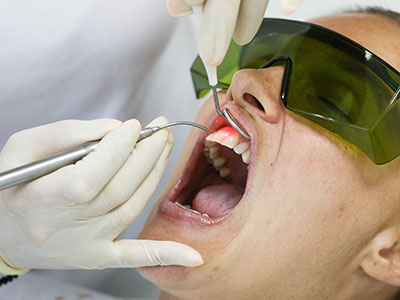
During the appointment you will typically notice minimal vibration and reduced noise compared with conventional drilling. The clinician works with a steady hand and a carefully calibrated device; because of the laser's targeted action, many steps that traditionally required more invasive techniques can be accomplished more gently.
After treatment, follow‑up depends on the specific procedure performed. In many cases postoperative instructions are straightforward—gentle oral hygiene, short‑term avoidance of certain foods, and a scheduled check to confirm healing. Because the laser helps limit trauma and bleeding, recovery is often quicker and requires fewer interventions to manage discomfort.
As with any treatment, outcomes depend on thoughtful case selection and proper aftercare. Your clinician will outline realistic expectations and answer questions about healing timelines so you know what to expect and how to support a smooth recovery.
Mountain Health Dentistry embraces technologies like the Waterlase® Laser from Biolase® to deliver care that is precise, conservative, and focused on patient comfort. If you’d like to learn more about how laser‑assisted dentistry might be applied in your care, please contact us for more information.